
Struggling to Choose Between Freelancers and Agencies for Web Development?
In today’s digital-first world, your website is your business’s front door. A poorly executed web development project can cost you time, money, and customers. But with so many options, how do you decide between freelancers vs agencies for web development?
The stakes are high:
- 88% of online consumers are less likely to return to a site after a bad experience (Source: Sweor).
- 50% of businesses fail to meet project deadlines due to poor team coordination (Source: PMI).
Hiring the wrong team can drain your budget, delay your launch, and hurt your brand reputation.
Freelancers promise affordability, but can they handle the complexity of modern web development?
Agencies offer full-service expertise, but are they worth the investment?
In this comprehensive guide, we’ll dissect Freelancers vs Agencies for Web Development across 8 critical factors to determine which delivers better ROI for your business.
Freelancers vs Agencies for Web Development: Core Differences
Before comparing ROI, let’s define what sets these two options apart.
Freelancers: Solo Specialists
- One-person operation: Typically specializes in one area (e.g., frontend development, UI/UX design).
- Cost-effective: Hourly rates range from ₹500–₹4000+, depending on expertise (vs agencies at ₹3000–₹8000+).
- Flexibility: Ideal for short-term tasks like bug fixes, plugin integrations, or MVP builds.
- Limited bandwidth: Juggling multiple clients may lead to delays or communication gaps.
Best for: Startups with tight budgets, small projects, or businesses needing niche skills.
Agencies: Full-Service Teams
- Structured teams: Include developers, designers, QA testers, and project managers.
- End-to-end solutions: Handle everything from wireframing to post-launch maintenance.
- Higher accountability: Legal contracts, NDAs, and compliance with data security standards.
- Scalability: Easily allocate resources for large or complex projects.
Best for: Enterprises, SaaS platforms, e-commerce sites, or long-term partnerships.
Cost Comparison: Freelancers vs Agencies for Web Development
Freelancers: Lower Upfront Costs, Hidden Risks
- Hourly rates: Developers on platforms like Upwork charge ₹500–₹2000/hour for basic tasks.
- Hidden costs:
- Revisions due to miscommunication.
- Delays from overbooked freelancers.
- No liability for project failures.
- Example: A ₹2,00,000 project could balloon to ₹3,20,000+ with unexpected fixes.
ROI Insight: Freelancers may seem cheaper initially but pose financial risks for complex projects.
Agencies: Higher Investment, Predictable Outcomes
- Fixed pricing: Most agencies offer transparent quotes (e.g., ₹6,00,000–₹20,00,000+ for custom websites).
- Included services:
- Project management
- Quality assurance
- Post-launch support
- Long-term savings: A study by Deloitte found businesses using agencies reduce rework costs by 40%.
ROI Insight: Agencies provide cost predictability and minimize budget overruns.
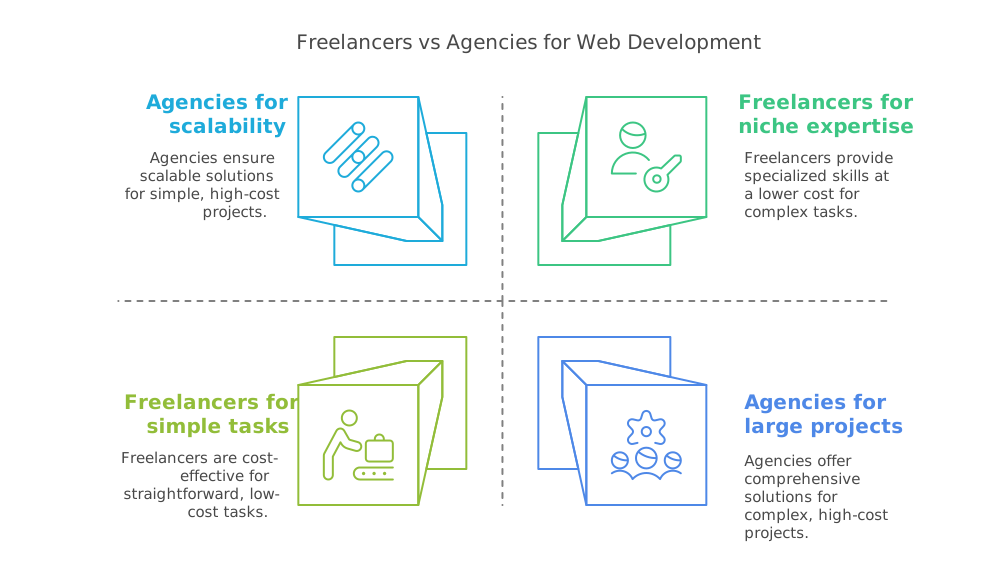
Verdict: For simple tasks, freelancers win on cost. For complex projects, agencies deliver better ROI.
Project Management: Time Savings vs DIY Chaos
Freelancers: You’re the Project Manager
- Coordination required: You’ll need to:
- Set deadlines.
- Manage communication across freelancers (if hiring multiple).
- Handle quality checks.
- Risks:
- 67% of freelancers admit to missing deadlines due to workload (Source: Upwork).
- No backup if your developer quits mid-project.
Agencies: Dedicated Teams Handle the Heavy Lifting
- Structured workflows: Most agencies use Agile or Scrum methodologies for efficient delivery.
- Single point of contact: A project manager updates you weekly and troubleshoots issues.
- Tools: Agencies often use Jira, Trello, or Asana for transparent task tracking.
ROI Insight: Agencies save 15–20 hours/month in management time, letting you focus on core business tasks.
Scalability: Can Your Team Grow with Your Business?
Freelancers: A Scaling Nightmare
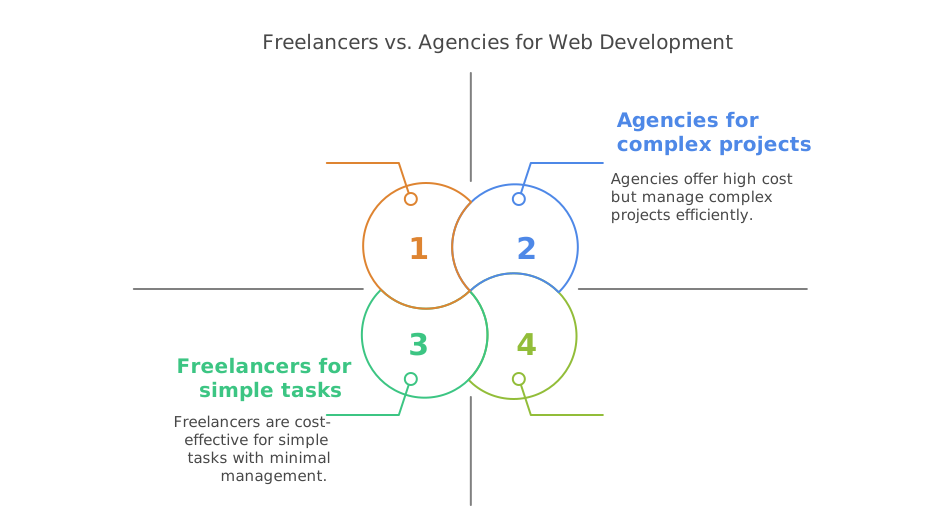
- Limited capacity: A solo developer can’t suddenly shift from 20 to 60 hours/week.
- Coordination chaos: Hiring 3–4 freelancers for a large project increases miscommunication risks.
- Example: An e-commerce site crashing during Black Friday due to insufficient backend support.
Agencies: Built for Growth
- Instant resource allocation: Need 5 developers next month? Agencies can onboard them swiftly.
- Cross-functional expertise: Access to specialists in DevOps, cybersecurity, or API integrations.
- Long-term roadmaps: Agencies align with your business goals for future updates.
ROI Insight: Agencies reduce scalability risks by 70% for high-growth businesses (Source: KPMG).
Quality of Work: Professional Standards vs Hit-or-Miss Results
Freelancers: Inconsistent Outcomes
- Portfolio gaps: A freelancer’s past work may not match your industry needs.
- No QA processes: Only 22% of freelancers conduct thorough testing (Source: GitHub Survey).
- Example: A freelance-built app failing due to poor cross-browser compatibility.
Agencies: Enterprise-Grade Quality
- Rigorous testing: Includes unit testing, UX reviews, and load testing.
- Certified expertise: Many agencies have partnerships with Adobe, Shopify, or Microsoft.
- Compliance: Ensure adherence to WCAG, GDPR, or HIPAA standards.
ROI Insight: Agencies reduce post-launch bugs by 60%, enhancing user satisfaction.
Maintenance & Support: Who Fixes Issues Post-Launch?
Freelancers: High Abandonment Rates
- No long-term commitment: 80% of freelancers prioritize new projects over old clients (Source: Freelancers Union).
- Extra charges: Bug fixes or updates may cost ₹2000–₹6000/hour.
- Risk: Critical security patches delayed, leaving your site vulnerable.
Agencies: Reliable Post-Launch Partnerships
- Support contracts: Most offer 3–12 months of maintenance included.
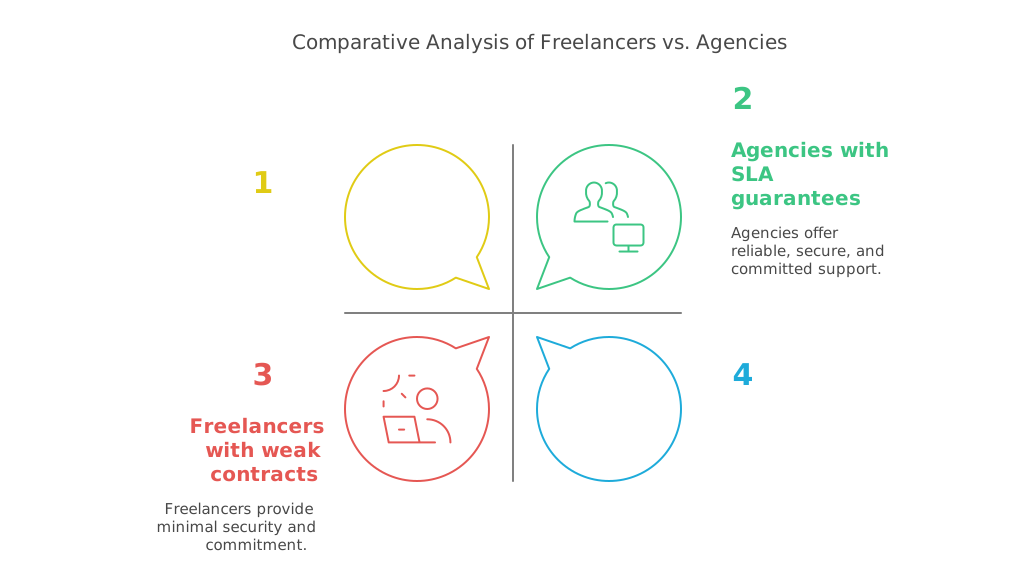
- SLA guarantees: 24/7 support with response times under 2 hours.
- Proactive updates: Regular backups, performance audits, and security monitoring.
ROI Insight: Agencies reduce downtime costs by 90% with timely support.
Legal & Security: Protecting Your Business
Freelancers: High-Risk Arrangements
- Weak contracts: Many use generic templates without IP ownership clauses.
- Data vulnerabilities: Freelancers often lack ISO certifications or encrypted workflows.
- Example: A freelance developer leaking sensitive user data.
Agencies: Comprehensive Protection
- Robust contracts: Detailed agreements covering IP rights, confidentiality, and liability.
- Security standards: Adherence to ISO 27001, GDPR, and other compliance frameworks.
- Insurance: Many agencies carry professional liability insurance to protect clients.
ROI Insight: Agencies provide a secure environment, reducing legal and data breach risks.
Conclusion: Making the Right Choice for Your Business
Choosing between freelancers and agencies for web development ultimately depends on your specific needs, budget, and long-term goals. Here’s a summary to help you decide:
Choose Freelancers If:
- You have a limited budget and need cost-effective solutions.
- Your project is small or requires niche skills.
- You can manage the project yourself and handle potential risks.
Choose Agencies If:
- You need a comprehensive, end-to-end solution.
- Your project is complex or requires scalability.
- You value long-term support, security, and legal protection.
In conclusion, while freelancers offer initial cost savings, agencies provide a more reliable, scalable, and secure option for businesses looking to maximize their ROI in web development. Assess your project requirements carefully and choose the option that best aligns with your business objectives.