
Struggling to Get Your Website Noticed?
Let’s face it. Getting your website noticed feels like chasing your tail sometimes.
You’ve tried the basics. Added keywords. Wrote some blogs. Optimized here and there.
Still nothing?
Here’s the deal: SEO isn’t just stuffing keywords or following some generic checklist. It’s about strategy. A clear plan that gets results.
By the end of this guide, you’ll know how to use keywords smartly, create content people care about, and optimize your site for maximum performance.
Let’s skip the fluff and get straight to it.
What Is an SEO Strategy?
SEO is like a fitness plan—but for your website.
It’s about building strength (keywords), endurance (content), and agility (technical SEO).
Why does it matter?
- It gets your site noticed by search engines.
- Attracts the right people—those ready to take action.
- Builds trust, credibility, and long-term traffic.
But here’s the catch: SEO is holistic.
Miss one piece, like poor content or bad navigation, and the whole thing collapses.
Think of SEO as your online reputation—but visible on Google.
Using Keywords the Right Way
Most people? They get keywords all wrong.
Here’s the trick:
- Don’t spam. Use keywords strategically.
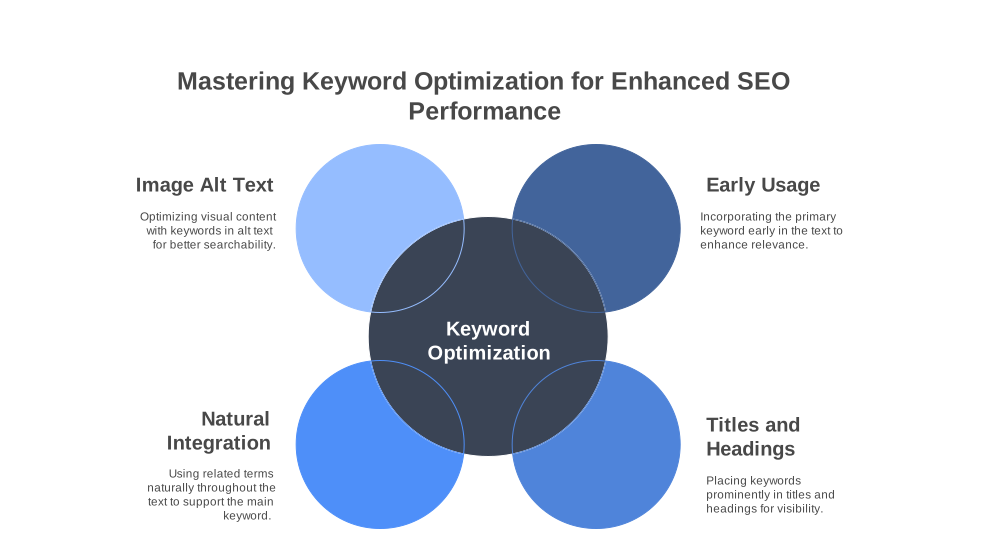
Best Practices for Keyword Placement
- First 100 words: Use your primary keyword early. For example, “SEO strategies for success.”
- Titles and Headings: Put your keywords front and center.
- Throughout the text: Use related terms naturally.
- Image Alt Text: Don’t forget to optimize visuals.
Real Example
Let’s say the keyword is “SEO strategies for success.”
Sprinkle it like this:
- Intro: “If SEO strategies for success are confusing, here’s the fix.”
- Headings: “How to Nail SEO Strategies for Success.”
- Conclusion: Wrap up with, “That’s how you win with SEO strategies for success.”
Write for people first, search engines second.
Creating High-Quality Content That Connects
Content isn’t for bots. It’s for humans.
If your content doesn’t help, entertain, or solve a problem, it’s worthless.
Here’s how to do it:
Write Like You Talk
- Use short sentences.
- Skip jargon.
- Answer real questions.
Formats That Work
- Blogs: Answer specific questions like “How to improve SEO fast?”
- Case Studies: Tell stories. Show results.
- How-To Guides: Step-by-step walkthroughs.
Quick Tip
Your audience’s Googling questions. Answer them.
Use tools like Google Trends, SEMrush, or AnswerThePublic to figure out what they’re searching.
Optimizing Your Website for Performance
A slow site? It’s a dealbreaker.
Google cares about speed. So do users.
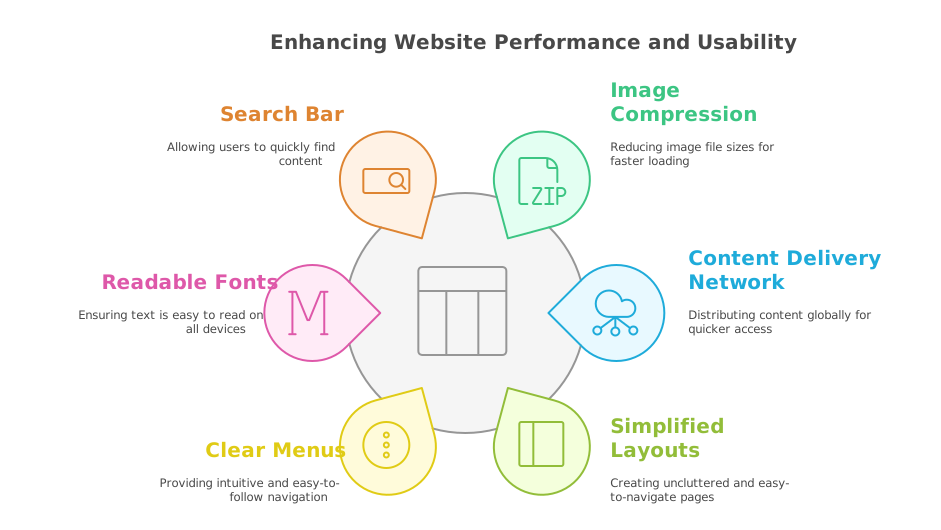
Speed Hacks That Work
- Compress images with tools like TinyPNG.
- Use a CDN (Content Delivery Network) for faster loading globally.
- Simplify layouts. No one likes clutter.
Easy Navigation
- Clear menus.
- Easy-to-read fonts.
- Add a search bar for quick finds.
- Test on mobile. If it doesn’t work on phones, you’re toast.
Tools You Need for SEO Success
You can’t win at SEO without the right tools.
Must-Haves:
- Google Search Console: Spot ranking issues.
- SEMrush or Ahrefs: Keyword research goldmines.
- Yoast SEO: Simplify on-page SEO.
- Google Analytics: See what’s working.
Free vs. Paid
- Start with free tools.
- As you grow, invest in pro versions for deeper insights.
Want to dive deeper into tools? Click here to explore the best ones.
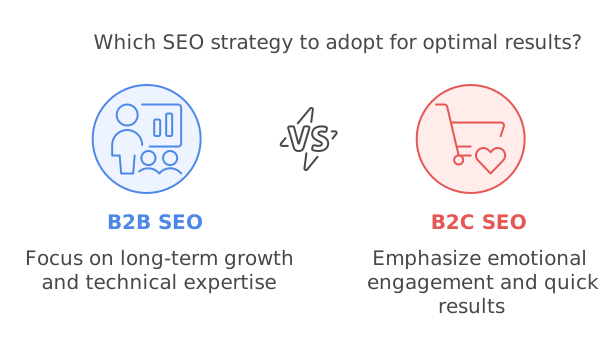
B2B vs. B2C SEO: What’s the Difference?
B2B SEO? Slow burn.
B2C? Quick wins.
How to Win B2B SEO
- Focus on case studies and whitepapers.
- Write technical blogs like “How to reduce downtime by 30%.”
- Leverage LinkedIn for visibility.
For B2C?
Keep it emotional. Sell fast.
Wrapping It Up
SEO isn’t rocket science.
Here’s the playbook:
- Use keywords wisely.
- Write content people love.
- Make your site fast and clean.
- Track everything with the right tools.
Ready to step up your SEO game? Check out more SEO strategies here.
Still got questions? Let’s chat.