
Why Isn’t My Website Ranking?
You’ve got a great business.
Your website looks top-notch.
But when you Google your service, it’s nowhere to be found.
Sound familiar?
The truth is, SEO isn’t about shortcuts.
It’s about doing the right things consistently.
On-page, off-page, technical, and local SEO—these aren’t buzzwords.
They’re your ticket to getting found online, driving traffic, and making sales.
Stick with me.
We’re breaking it all down.
Step by step.
Simple, clear, actionable.
On-Page SEO Strategies for Better Website Optimization
What Is On-Page SEO and Why Does It Matter?
On-page SEO is all about what’s on your website.
Think content, keywords, headlines, and meta descriptions.
It’s about making your site easy for Google to understand and irresistible for visitors.
If your content isn’t optimized, search engines won’t know what your page is about.
And if your page doesn’t engage visitors?
They’ll bounce—and Google hates that.
How to Nail On-Page SEO:
Here’s how you get it right:
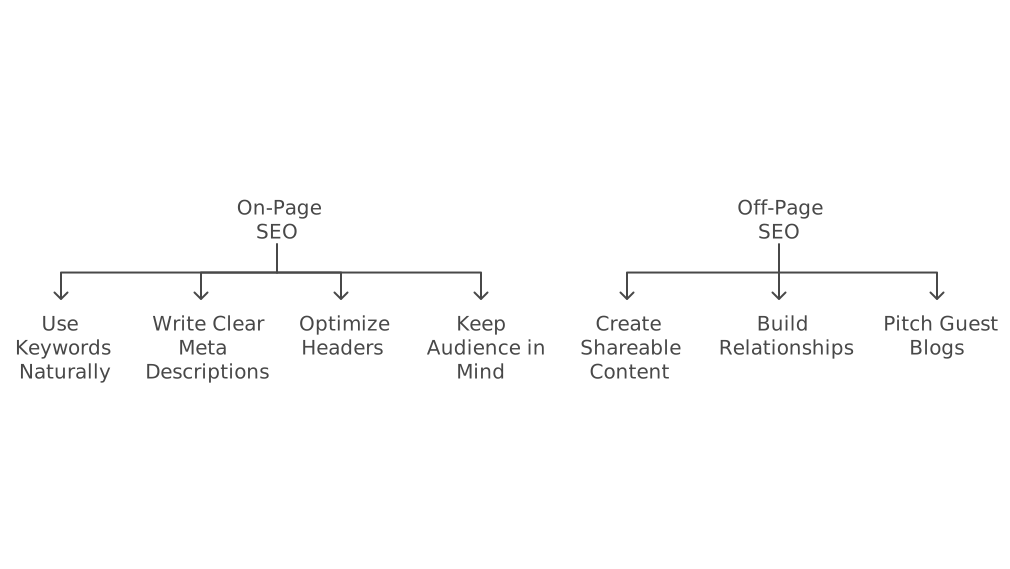
- Use keywords naturally: Place them in titles, headers, and throughout the content. No stuffing. Just flow.
- Write clear meta descriptions: This is your chance to hook readers before they even click.
- Optimize headers (H1, H2, H3): They make your content scannable—for both humans and search engines.
- Keep your audience in mind: Write for people, not just bots.
💡 Pro Tip: Use tools like Google Keyword Planner to find the right keywords.
Want more tips?
Learn how to avoid SEO mistakes here.
Off-Page SEO Strategies for Building Authority
What Is Off-Page SEO?
Off-page SEO is everything outside your website.
Think backlinks, social proof, and building trust in your industry.
It’s how Google decides if you’re credible or not.
And credibility = rankings.
How to Build Backlinks Without Being Spammy
Forget begging for links.
Here’s what works:
- Create content people actually want to share: Think guides, case studies, or even memes if that’s your thing.
- Build relationships in your niche: Genuine connections lead to collaborations and backlinks.
- Pitch guest blogs: Offer value to sites your audience already loves.
Consistency beats gimmicks every time.
Ready to level up?
Explore how to boost website authority here.
Technical SEO Essentials for a Faster, Better Website
What Is Technical SEO?
It’s the engine under the hood of your website.
Slow website? Broken links? No HTTPS?
Say goodbye to rankings.
How to Fix Technical SEO
Here’s a quick checklist:
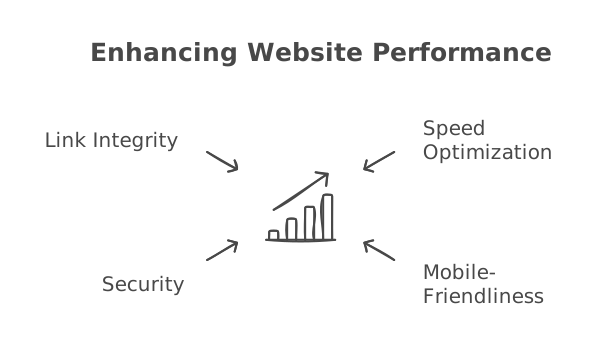
- Speed up your site: Compress images and clear out junk code.
- Make it mobile-friendly: Over half your visitors are on their phones.
- Secure your site (HTTPS): No one’s sticking around if your site screams “unsafe.”
- Fix broken links: They frustrate users and confuse search engines.
Google has a free tool called PageSpeed Insights.
Run your site through it.
You’ll know exactly what to fix.
Click here to see how tools can simplify technical SEO.
Local SEO for Small Businesses: Your Secret Weapon
What Is Local SEO and Why Should You Care?
If you run a small business, local SEO is your bread and butter.
It’s how you show up when someone nearby searches for your service.
Steps to Dominate Local SEO
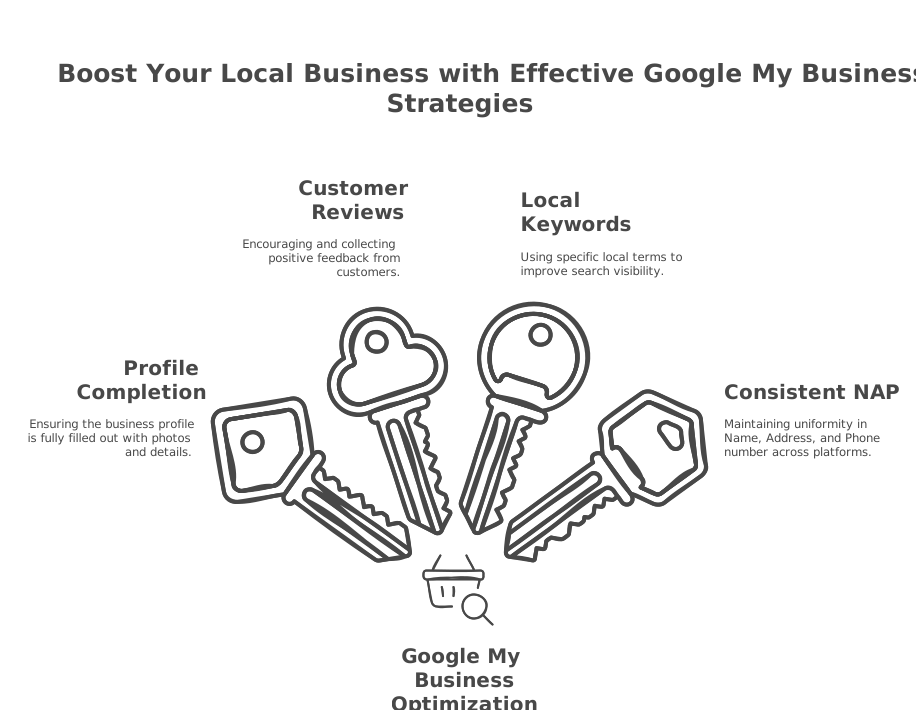
- Claim your Google My Business profile: Fill it out completely. Add photos.
- Get customer reviews: These are gold. Encourage happy customers to share their experience.
- Use local keywords: Think “best chai shop in Delhi” or “gym near me.”
- Keep your NAP consistent: Your Name, Address, and Phone number should match everywhere.
The result?
More foot traffic.
More calls.
More business.
Want to dive deeper?
Learn more about local SEO here.
Tools and Analytics to Track Your SEO Success
How to Know If Your SEO Is Working
Data doesn’t lie.
Use tools like:
- Google Analytics: Track traffic and user behavior.
- SEMrush: Monitor keyword rankings.
- Ahrefs: Check backlinks and spot opportunities.
Key Metrics to Watch:
- Organic traffic
- Bounce rate
- Conversions
If your metrics aren’t improving, tweak your strategy.
Conclusion
SEO doesn’t have to be complicated.
Start with on-page, off-page, technical, and local strategies.
Do the basics well.
Track your progress.
And keep improving.
Need a deeper dive?
Check out our full SEO guide here.
Your rankings—and your bottom line—will thank you.