
Digital Marketing Agency Vs Hiring New Employees: Agility in a Dynamic Market
Why Agility Matters in a Dynamic Market for Digital Marketing
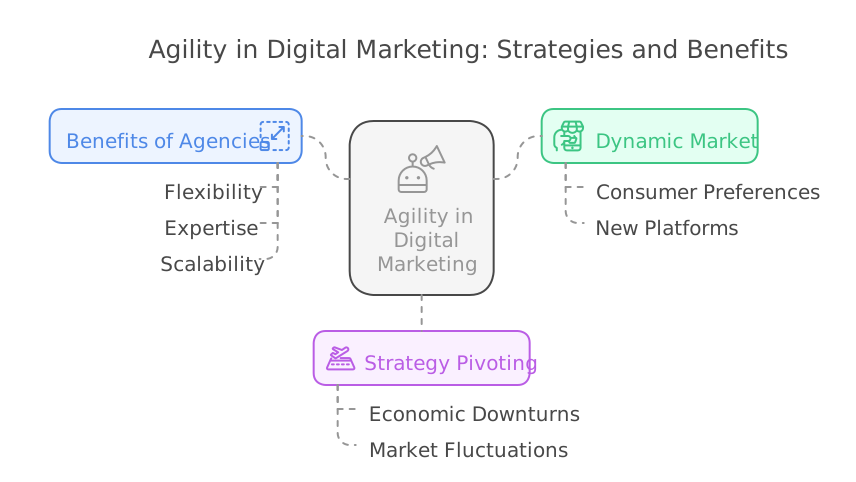
In a world where consumer preferences shift overnight and new platforms emerge every few months, businesses must be agile to stay competitive in a dynamic market. Agility means being able to pivot strategies quickly, adapt to new trends, and make data-driven decisions in real time.
Hiring new employees might seem like a solution, but it often leads to rigidity. Training, onboarding, and managing an in-house team can slow you down. On the other hand, a digital marketing agency offers flexibility, expertise, and scalability, making it a smarter choice for businesses aiming to stay ahead in a dynamic market.
Pivoting Strategies During Economic Shifts
Economic downturns and market fluctuations are inevitable. Businesses that can pivot quickly are the ones that survive and thrive.
A digital marketing agency excels in this area. With diverse expertise across industries, agencies can swiftly adjust marketing strategies to align with changing market conditions. For example, during a recession, they might shift focus from brand awareness campaigns to performance-driven tactics that deliver immediate ROI.
In contrast, in-house teams often struggle with pivoting. Hiring and training new employees during economic downturns is costly and time-consuming. Plus, in-house teams may lack the breadth of expertise needed to adapt strategies effectively.
According to a study by Tattvam Media, businesses that partnered with agencies during the 2020 recession saw a 30% higher retention rate compared to those relying solely on in-house teams.
Leveraging Real-Time Data for Quick Adjustments
In digital marketing, data is king. The ability to analyze real-time data and make quick adjustments is what sets successful businesses apart.
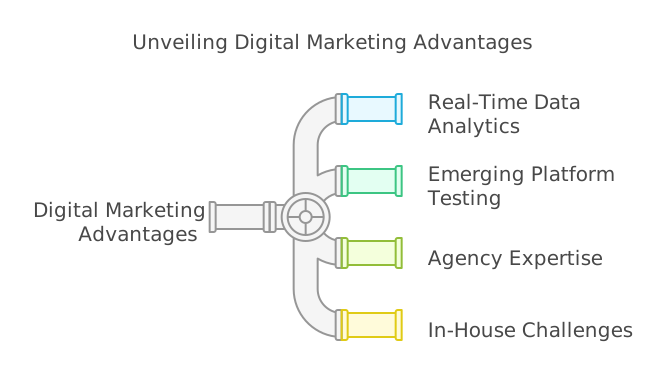
Agencies have access to advanced analytics tools that provide immediate insights into campaign performance. This allows them to optimize strategies on the fly, ensuring maximum ROI. For instance, if a campaign isn’t performing as expected, an agency can tweak the targeting, adjust the budget, or switch platforms within hours.
In-house teams, however, often face challenges in this area. Building the infrastructure for real-time analytics and training employees to use these tools effectively can be resource-intensive. Without the right expertise, businesses risk falling behind competitors who are quicker to adapt.
As noted by Cognism, “Real-time marketing isn’t just a trend; it’s a necessity in today’s fast-paced digital world.”
Testing Emerging Platforms (e.g., Threads, TikTok Shop)
The digital landscape is constantly evolving, with new platforms like TikTok Shop and Threads gaining traction. Staying ahead of the curve requires businesses to experiment with these emerging channels.
Agencies are often early adopters of new platforms. They have the resources and expertise to test these channels and determine their potential ROI for your business. For example, TikTok Shop has become a game-changer for e-commerce brands, and agencies are at the forefront of leveraging its capabilities.
In-house teams, on the other hand, may lack the bandwidth or expertise to experiment with new platforms. Staying updated on emerging trends requires continuous learning and investment, which can be a challenge for businesses with limited resources.
As highlighted by LinkedIn, “The ability to adapt to emerging platforms is a key differentiator in today’s digital marketing landscape.”
Adapting to Consumer Behavior Changes Post-Pandemic
The pandemic has permanently altered consumer behavior. Today’s consumers seek personalized experiences, empathetic engagement, and seamless digital interactions.
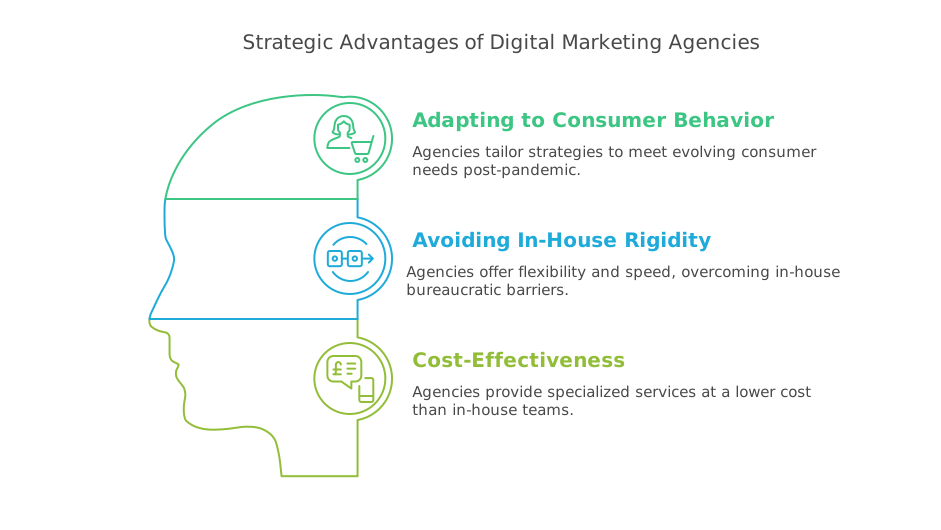
Agencies are well-equipped to help businesses adapt to these changes. They can craft personalized marketing campaigns that resonate with post-pandemic consumers, fostering loyalty and stronger brand connections. Additionally, agencies can facilitate digital transformation by enhancing e-commerce capabilities and aligning strategies with new consumer habits.
In-house teams may struggle to keep up with these changes. Adapting to post-pandemic consumer behavior requires a deep understanding of shifting preferences and the ability to implement new technologies—areas where agencies often have the upper hand.
According to Allied Academies, “Businesses that fail to adapt to post-pandemic consumer behavior risk losing relevance in an increasingly digital world.”
Avoiding Rigidity of In-House Processes
One of the biggest challenges with in-house teams is the rigidity of internal processes. Bureaucracy, organizational silos, and slow decision-making can hinder agility.
Agencies, however, operate without these constraints. They offer flexibility and speed, enabling businesses to implement strategies quickly and efficiently. Moreover, agencies provide access to a wide range of specialists—from SEO experts to content creators—without the need for long-term hires.
For example, a business looking to scale its marketing efforts during a product launch can rely on an agency to provide the necessary resources and expertise. In contrast, an in-house team may struggle to scale up quickly due to limited resources and rigid processes.
As pointed out by Dimerse, “The flexibility of a digital marketing agency is unmatched, making it a valuable asset for businesses in a dynamic market.”
Cost-Effectiveness of Digital Marketing Agencies
Hiring new employees comes with significant costs—salaries, benefits, training, and infrastructure. For many businesses, especially SMEs, these costs can be prohibitive.
A digital marketing agency offers a cost-effective alternative. Agencies provide specialized services without the long-term commitment of hiring new employees. This makes them a more scalable and budget-friendly option, particularly during uncertain economic times.
For instance, outsourcing your digital marketing needs to an agency can save up to 40% compared to maintaining an in-house team. Need more insights on cost savings? Check out our detailed guide on outsourcing a digital marketing agency for cost savings.
Conclusion
In today’s dynamic market, agility is non-negotiable. Businesses must be able to pivot strategies quickly, leverage real-time data, and adapt to emerging trends and consumer behavior changes.
While hiring new employees might seem like a viable option, it often leads to rigidity and inefficiency. On the other hand, partnering with a digital marketing agency offers the flexibility, expertise, and scalability needed to stay competitive.
Ready to take your business to the next level? Consider outsourcing your digital marketing needs to an agency and experience the benefits of agility firsthand.