
The Growing Importance of Project Planning in India’s Startup Ecosystem
India’s startup ecosystem is booming, with over 90,000 startups and 100+ unicorns as of 2023 (Invest India). Yet, 70% face delays when collaborating with agencies. Why? Rapid scaling often outpaces structured Project Planning for Startups, leading to misaligned goals and operational chaos. For instance, a Bengaluru-based healthtech startup lost six months redesigning an app because the agency misinterpreted scalability requirements. This underscores the need for meticulous Project Planning for Startups—a blend of strategic foresight, clear communication, and agile execution.
In this expanded guide, we dive deeper into frameworks, tools, and real-world strategies to transform your startup-agency collaboration.
Why Your Startup Needs a Project Brief Template: Beyond the Basics
A structured template isn’t just a document—it’s your startup’s survival kit.
The Anatomy of a High-Impact Project Brief
- Executive Summary:
- Context: “A food delivery startup aiming to reduce delivery time by 30% in Tier-2 cities.”
- Objective Alignment: Link to broader business goals (e.g., market expansion, customer retention).
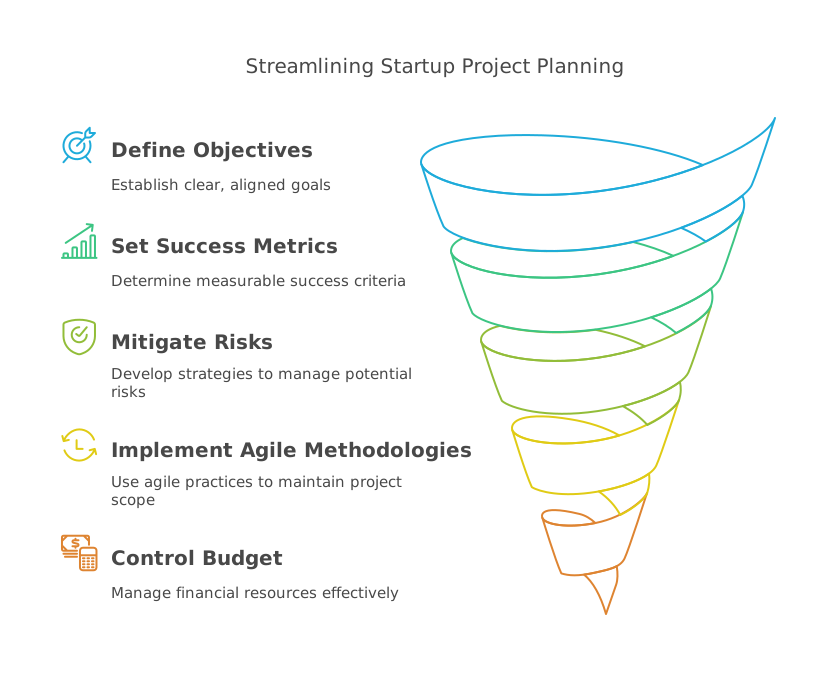
- Success Metrics:
- Quantitative: “Achieve 50,000 app downloads in Q1.”
- Qualitative: “Improve user satisfaction scores from 3.8 to 4.5 stars.”
- Risk Mitigation Plan:
- Example: “If user acquisition costs exceed ₹200 per lead, pause campaigns and reassess channels.”
Evolution of Digital Templates
Modern Project Planning for Startups leverages AI-driven tools like Notion or Trello, which auto-generate task lists from briefs. For example, a Mumbai fintech startup used Notion’s AI to convert stakeholder inputs into a prioritized roadmap, cutting briefing time by 60%.
Deep Dive: Solving 3 Critical Challenges in Project Planning for Startups
1. From Vague Goals to SMART KPIs
- SMART Framework:
- Specific: “Increase monthly active users (MAUs) by 25%.”
- Measurable: Use tools like Google Analytics or Mixpanel.
- Achievable: Allocate ₹5 lakhs/month to performance marketing.
- Relevant: Align with quarterly revenue targets.
- Time-bound: “Achieve in 6 months.”
- Case Study: Edtech startup ClassUp doubled course sign-ups by shifting from “improve engagement” to “increase webinar attendance by 40% in 8 weeks.”
2. Taming Scope Creep with Agile Methodologies
- Sprint Planning: Break projects into 2-week sprints with deliverables like:
- Sprint 1: User authentication setup.
- Sprint 2: Payment gateway integration.
- Kanban Boards: Visualize tasks (To-Do, In Progress, Done) using tools like Jira.
- Red Flag Alert: Scope creep often starts with “Can we just add…?”. Counter with a change request form requiring stakeholder sign-off.
3. Budget Control via Predictive Analytics
- Tool Example: Use Zoho Analytics to forecast expenses based on historical data.
- Contingency Funds: Allocate 15-20% of the budget for unforeseen costs (e.g., third-party API fees).
Beyond MoSCoW: Advanced Frameworks for Prioritization
While MoSCoW (Must-have, Should-have, Could-have) is popular, consider these:
- RICE Scoring:
- Reach (Users impacted), Impact, Confidence, Effort.
- Example: A social commerce startup prioritized “chat support” (High Impact, Low Effort) over “AR try-on” (High Effort, Uncertain Impact).
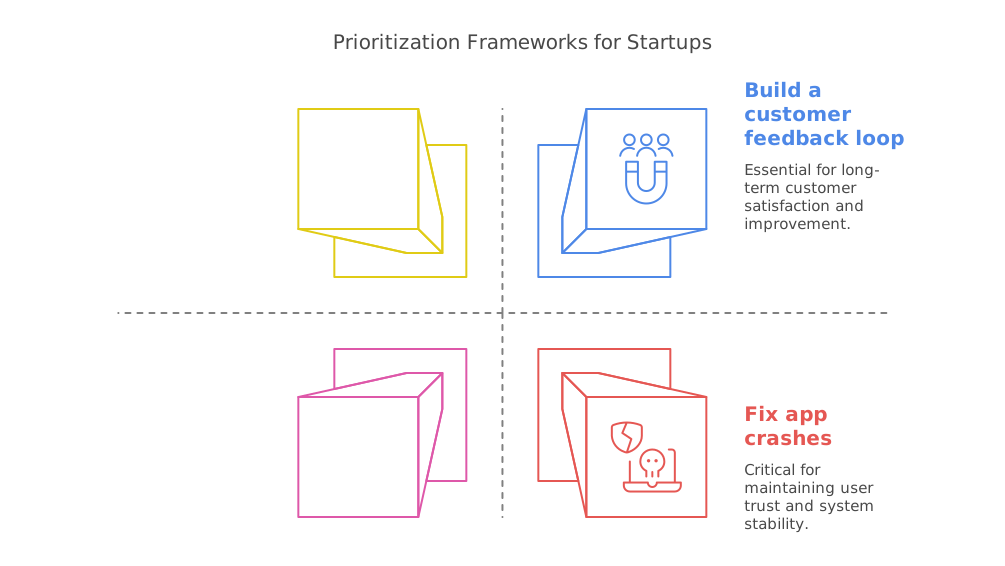
- Eisenhower Matrix:
- Quadrant 1 (Urgent & Important): Fix app crashes.
- Quadrant 3 (Not Urgent but Important): Build a customer feedback loop.
Choosing the Right Agency: A Founder’s Checklist
- Portfolio Relevance:
- If you’re a SaaS startup, prioritize agencies with CI/CD pipeline expertise.
- Cultural Fit:
- A Gurugram-based D2C startup failed with a rigid agency; they thrived after switching to a flexible partner using daily standups.
- Red Flags:
- Vague contracts, lack of NDAs, or reluctance to share client references.
Case Study: How HealthifyMe Scaled with the Right Partner
HealthifyMe partnered with a DevOps agency to reduce app latency by 70%. Key steps:
- Shared a detailed brief with load-testing benchmarks.
- Included penalties for missing SLAs.
- Scheduled bi-weekly reviews using Asana.
Advanced Step-by-Step Guide to Project Planning for Startups
Step 1: Define Business Goals with Market Insights
- Competitor Analysis: Use SEMrush or SimilarWeb to identify gaps.
- User Personas: Create detailed profiles (e.g., “Tejas, 28, tech-savvy, shops via Instagram ads”).
Step 2: Technical Deep Dive
- API Integrations: Prioritize security with OAuth 2.0 for user data.
- Scalability: Opt for cloud solutions like AWS or Firebase.
Step 3: Communication Protocols for Remote Teams
- Tools: Slack for daily updates, Zoom for weekly reviews, Figma for real-time design collaboration.
- RACI Matrix: Clarify roles (Responsible, Accountable, Consulted, Informed).
Top 10 Tools for Seamless Project Planning for Startups
| Category | Tool | Use Case |
|---|---|---|
| Task Management | ClickUp | Sprint planning, Gantt charts |
| Budget Tracking | Zoho Projects | ROI analysis, expense forecasting |
| Design Collaboration | Figma | Real-time prototyping |
| Documentation | Notion | Centralized brief templates |
Post-Project Evaluation: Learning and Iterating
- Retrospective Meetings:
- Ask: “What worked? What didn’t? How can we improve?”
- Long-Term Metrics:
- Track customer lifetime value (LTV) and net promoter score (NPS).
- Iterate the Brief:
- Update templates with lessons learned (e.g., “Add data privacy clauses after GDPR audit”).
FAQ: Project Planning for Startups
Q: How often should we update the project brief?
A: Review bi-weekly. For agile projects, update sprint-wise.
Q: What if the agency misses deadlines repeatedly?
A: Enforce penalty clauses (e.g., 1% daily fee) and assign a backup resource.
Conclusion: Building a Culture of Strategic Project Planning
Project Planning for Startups isn’t a one-off task—it’s a mindset. By marrying structured templates with agile execution, startups can turn agency partnerships into growth accelerators.
Final CTA: Download our Advanced Project Planning Kit with templates, checklists, and tool comparisons.